Cyclic Progesterone Therapy: What It Is and How It's Prescribed
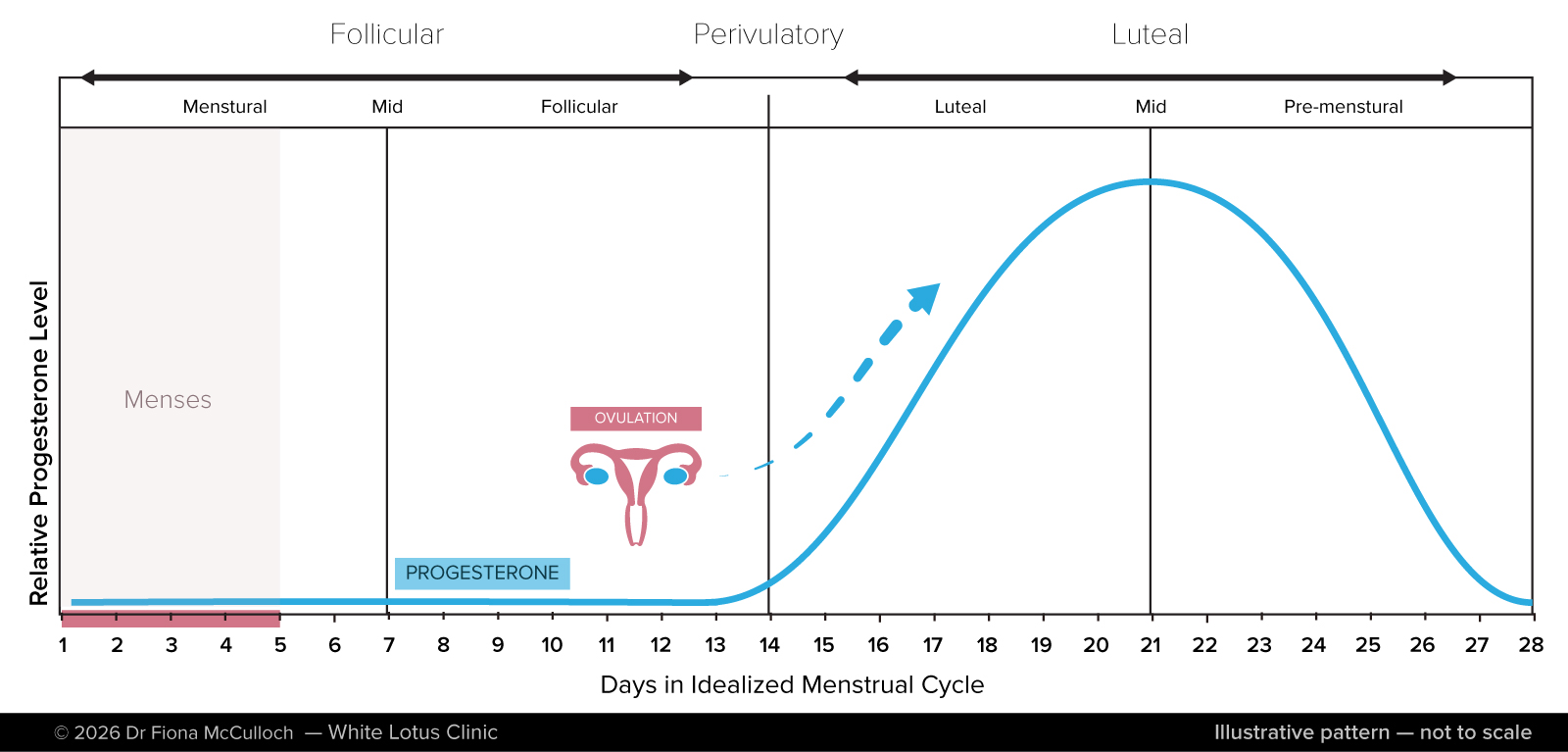
Progesterone is the natural hormone released by the ovary, after ovulation occurs. Levels of progesterone are high for approximately two weeks after ovulation, after which they drop to a low level, inducing the next period.
Cyclic progesterone therapy copies the body's natural rise and fall: the hormone is given on a repeating on-and-off schedule just like in natural cycles. The molecule used for this treatment is bioidentical micronized progesterone, a different compound from the synthetic progestins used in birth control pills and hormonal IUDs.
We'll cover the specific differences between progestins and progesterone, along with the different conditions that can be treated with cyclic progesterone.
Licensed to prescribe bioidentical hormones in Ontario
Established 2002
Which Molecule Is Being Prescribed
Progesterone is a natural hormone and is different from synthetic progestins, which are commonly prescribed in birth control pills, hormonal IUDs or in other similar medications.
Synthetic progestins have more risks and don't provide the same benefits as natural progesterone. Despite research confirming the clear differences between progesterone and progestins, it's still common for practitioners to think of them as the same.
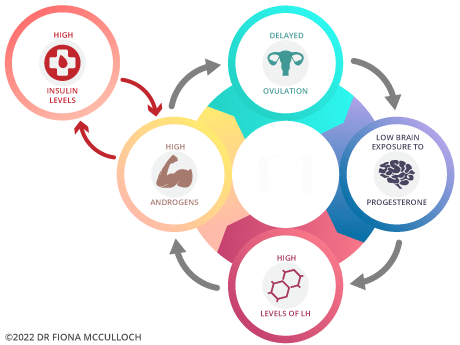
Natural progesterone acts as a natural anti-androgen, reduces levels of LH and is an important factor in the communication between the brain and ovary in the process of healthy ovulation. Side effects of natural cyclic progesterone are rare as this hormone is naturally present in the body for 2 weeks out of every month. Natural progesterone hasn't been found to cause the same risks for blood clots as synthetic progestins have (5).
Many patients we see have already used a hormonal contraceptive, the pill or a hormonal IUD. What those deliver is a synthetic progestin rather than micronized progesterone.
Progesterone is the bioidentical micronized hormone, structurally identical to the one the ovary makes. Progestins are synthetic compounds: medroxyprogesterone, sold as Provera, along with the various progestins used in birth control pills and hormonal IUDs.
Natural progesterone is low risk and hasn't been found to carry the same risk of blood clots that synthetic progestins can carry (5).
The two get discussed as one thing for understandable reasons: they sound similar, and can both produce a withdrawal bleed when they're stopped. Despite these similarities, the two are distinct molecules with distinct pharmacology, and the research literature treats them separately.
Their impact on fertility is quite different: for example, progestins in hormonal contraception work by suppressing ovulation. Cyclic dosing of natural progesterone permits ovulation, and in PCOS, used over a long enough stretch, it can indirectly encourage ovulation by lowering testosterone.
This treatment in particular should use the bioidentical micronized molecule, natural progesterone, rather than synthetic progestins.
Signs of Low Progesterone
If progesterone is too low it can cause:
Heavy periods
Painful periods
In patients with PCOS and excess of testosterone: unwanted hair growth, androgenic hair loss, irregular cycles
Premenstrual syndrome
In perimenopause: insomnia, irritability and anxiety
Fertility concerns like miscarriages or implantation failure
Inflammation (progesterone is anti-inflammatory)
These are the patterns we see most often where progesterone is running low. Although low progesterone may be only one contributor among several, it can be significant!
How to Take Cyclic Progesterone: The Schedule and the Reasoning
Cyclic progesterone therapy involves taking natural progesterone at bedtime for 2 weeks "off" and 2 weeks "on" every month. This follows the natural pattern of hormone production and can help reestablish normal hormonal balance.
At the end of the 2 weeks "on" patients will typically have a menstrual bleed and the cycle begins again.
Progesterone across an idealized cycle — low through the follicular phase, rising after ovulation, peaking mid-luteal, then falling. Illustrative pattern, not to scale.
Cyclic progesterone therapy is generally given for a minimum of 3 months and in many cases for longer.
In our Toronto clinic, our naturopaths prescribe cyclic progesterone in the form of natural micronized progesterone suppositories.
It's taken at bedtime because progesterone can cause sleepiness. To learn more about progesterone and sleep read progesterone, insomnia and menopause.
Our naturopathic doctors prescribe micronized progesterone vaginal suppositories: the blood levels achievable are similar to oral dosing.
Progesterone works slowly, across cycles rather than days, and is a very gentle treatment. Three months to nine months is a common timeline to see significant improvement with this treatment.
Cyclic Progesterone vs Continuous Perimenopause
In patients of reproductive age who have a desire to ovulate or for regular cycles, we use cyclic dosing, always. That holds whether a patient is ovulating now or is at an age where they could be.
Continuous dosing of progesterone in reproductive ages tends to make cycles less regular rather than more regular, and it can disrupt ovulation, though it doesn't block it entirely. A cyclic schedule leaves natural ovulation intact. However in some special situations such as prolonged heavy bleeding a continuous progesterone approach may be best.
In perimenopause we stay cyclic until cycles become extremely irregular, then it becomes a choice as to whether to cycle or use continuous therapy. Estrogen output is still substantial at this stage, and in the earlier phases cycles are often moderately regular. Where any regularity is left in the cycle at all, continuous dosing tends to unsettle it further.
After menopause, cyclic dosing makes withdrawal bleeds more likely, and continuous dosing decreases bleeding. Cycling or continuous is often decided based on a patient's goals and her tolerance for bleeding rather than on a clinical default. Some patients feel better cycling on and off. Others feel better staying on it continuously.
Cyclic Progesterone Therapy by Condition
Cyclic Progesterone for PCOS
Cyclic progesterone therapy works at the level of the brain in PCOS, to help manage levels of testosterone and androgens.
Women with PCOS often have low levels of progesterone as they don't ovulate regularly, and therefore don't make enough of this hormone. Cyclic progesterone therapy reduces levels of LH by slowing the pulsation of GnRH, hormones produced by the brain that regulate how the ovary makes hormones (1).
When repeated in consecutive cycles at the correct dose, most patients experience a reduction in LH and androgens or testosterone levels along with their androgenic symptoms of PCOS.
Since androgens like testosterone are often involved in blocking ovulation, many PCOS patients begin to ovulate with this treatment.
Progesterone can also prevent endometrial hyperplasia and atypia as it induces withdrawal bleeds.
The most common prescription to induce withdrawal bleeds in PCOS is not natural progesterone. It's actually a synthetic progestin: medroxyprogesterone, commercially known as Provera. Withdrawal bleeds can also be achieved with natural cyclic progesterone, but it also works on the deeper root problems in PCOS: high androgens, AMH and LH.
Since androgen excess is an underlying cause of insulin resistance in PCOS, cyclic progesterone can also support the management of insulin resistance and a healthy metabolic rate.
Cyclic Progesterone in Perimenopause and Menopause
Cyclic progesterone therapy has many applications for perimenopause. It can lighten the problematic heavy menstrual cycles that are common in this phase of life. It can support deep sleep and help to manage mood, anxiety and irritability.
In menopause, cyclic progesterone therapy can improve:
bone density
sleep
mood
hot flashes
Cyclic Progesterone Therapy for Irregular Periods, Heavy Bleeding and Painful Periods
One of the most consistent benefits of cyclic progesterone therapy is that it can lighten heavy periods, also known as menorrhagia. Progesterone opposes the effect of estrogen on the lining, keeping it in check and reducing heavy bleeds.
Cyclic progesterone can also improve painful periods due to its anti-inflammatory effects on the endometrial lining (2).
Cyclic Progesterone for Endometriosis
Endometriosis is a whole-body inflammatory condition where cells similar to those which line the uterus are found in different locations in the body. Patients with endometriosis can have a variety of symptoms including fatigue, menstrual pain, painful intercourse, and bowel symptoms just to name a few. Due to its anti-inflammatory effects, cyclic progesterone therapy can support many of the symptoms of endometriosis and may reduce the excessive overgrowth of these cells (3).
We have found that many patients seeing us for endometriosis improve with cyclic progesterone therapy.
Cyclic Progesterone and Female Fertility
Progesterone is required to support the implantation of an embryo within the endometrial lining. Low levels of progesterone have been linked to miscarriages. Progesterone exerts anti-inflammatory effects which are likely crucial for healthy implantation and pregnancy (4). Progesterone may be more important for patients with inflammatory or autoimmune conditions who are trying to conceive.
When given for fertility, cyclic progesterone is given after ovulation as a vaginal suppository for 2 weeks out of every cycle. If a patient isn't ovulating regularly, has PCOS and is trying to conceive, progesterone is given for 2 weeks "on" and 2 weeks "off".
This treatment can apply both to anovulatory and oligo-ovulatory PCOS patterns, where the missing luteal phase is what's being replaced.
What an Intake for Cyclic Progesterone Covers
Cyclic progesterone is a prescription therapy, so your licensed Naturopathic Doctor will complete a comprehensive health assessment for you before prescribing this treatment.
Our intake goes through the whole history of periods, hormones and cycles, and other health concerns, family history and much more. We ask about pain, about whether hormones have ever been tested, and we check into the thyroid along with any other relevant systems. In particular we find that poor iron status and anemia are common problems with anyone who has been bleeding heavily.
From there we write up a lab test protocol and in some cases we can prescribe on the first visit. However in other situations we may need to complete testing before determining if a patient is a candidate for this treatment.
We prescribe vaginal suppositories, compounded forms and cream. For oral progesterone we refer to partner providers who can prescribe it.
Course, Timeline and Side Effects of Cyclic Progesterone Therapy
In many cases, progesterone can cause some mild side effects initially such as menstrual spotting during the first cycle of use in particular. This is more common in patients with high levels of estrogen and typically resolves after the first cycle.
In general natural progesterone is a very gentle and well tolerated treatment. Since progesterone works slowly and gradually over several cycles, most side effects are mild and resolve as treatment continues. Natural progesterone can definitely cause sleepiness and for this reason, it's given at bedtime.
Although there are some patients who can't tolerate progesterone, this is quite rare due to its natural presence in such large quantities in the body when hormones are regulated.
Cyclic progesterone can be an extremely helpful treatment for PMS (premenstrual syndrome) and depressive, irritable or anxious mood changes that occur before the period arrives.
PMDD is a serious hormone-related change in mental health and functionality that affects a patient's ability to function in their daily life. Even when hormones are perfectly balanced, patients with PMDD have a different brain/mood response to hormone changes than those without the condition. Patients with PMDD may not be able to tolerate progesterone, other hormone treatments and their own natural ovulatory hormonal changes.
For heavy periods, three to four months is usually what it takes for a significant change, though many patients notice lightening within the first couple of months.
For PCOS, there's often improvement within the first couple of cycles, with consistent cycle regulation typically between six and nine months, after which most patients have regular, predictable cycles. Sleep and mood shift fastest, often within days.
Getting Used to Progesterone: The Adjustment Window
The first few days can feel stronger than it will later on when it comes to grogginess in particular. After the first few days this resolves and many patients will start noticing the benefit.
For patients with heavy periods, the first cycle is often still irregular, with more shedding of the lining. In some cases the shedding will still be quite heavy at first. However, in time and with persistence, progesterone consistently lightens periods.
Some conditions, PCOS among them, can permanently improve after a sustained course of progesterone cycles. Some patients who stay on it long term do so because they feel better with it than without it, or because they have chronically heavy cycles.
When it comes to cancer risk, progesterone has some protective effects. Unopposed estrogen thickens the uterine lining, cyclic progesterone opposes estrogen, and stopping it sheds the lining. The resulting withdrawal bleed prevents endometrial hyperplasia, and reduces endometrial cancer risk.
In older hormone-therapy trials that generated fear of breast cancer from hormones, they administered oral conjugated estrogen combined with a synthetic progestin, medroxyprogesterone acetate, not natural progesterone. The population in this study also had a very high baseline cancer risk, which shaped the outcome data. Natural progesterone has never been found to increase the risk of breast cancer and some research suggests that it has properties that protect against breast cancer.
Cancers that develop incidentally can feed off hormones, so following the breast screening guidelines for a patient's age range stays essential on any hormone therapy.
Frequently Asked Questions About Cyclic Progesterone Therapy
What is cyclic progesterone therapy?
Cyclic progesterone therapy involves taking natural progesterone for 14 days "off" and 14 days "on" repeatedly. This can be completed with micronized progesterone, or natural progesterone vaginal suppositories.
When should I take cyclic progesterone?
Cyclic progesterone is always prescribed and monitored by a doctor or naturopathic doctor with prescribing rights. It's always taken at bedtime, since it can cause sleepiness. Taking it at bedtime can also improve sleep quality, allowing patients to experience better, deeper sleep.
How do you get prescribed cyclic progesterone?
At White Lotus, we commonly prescribe cyclic progesterone therapy as micronized progesterone suppositories. If you are located in Ontario, reach out to us to book an appointment either in-person or through telemedicine. We often complete lab testing before prescribing this treatment so we can track the progress of our patients.
Cyclic progesterone therapy is one component of a comprehensive approach to PCOS care. For a full overview of how we assess and manage PCOS, including when cyclic progesterone is appropriate, see how we approach PCOS care at our Toronto clinic.
How does cyclic progesterone induce periods or bleeds?
Cyclic progesterone can induce withdrawal bleeds for patients with PCOS who don't ovulate. It opposes the effect of estrogen on the lining and when it's stopped, the lining will shed. This is important to prevent thickening of the lining (endometrial hyperplasia) and reduces the risk of endometrial cancer.
Cyclic progesterone can also reduce levels of androgens like testosterone in PCOS. Since androgens block ovulation, this can allow some patients to ovulate naturally and have natural periods when the 14 days "on" is complete.
Is cyclic progesterone therapy safe?
Natural cyclic progesterone or micronized progesterone is generally a safe and well-tolerated treatment. Our bodies should have a large amount of progesterone in them for 14 days out of every 28 days. In patients with PCOS who don't have periods, cyclic progesterone can induce bleeds and reduce the risk of endometrial hyperplasia (thickening of the lining).
Keep in mind that natural progesterone is different from synthetic progestins. Progestins have various side effects and risks depending on the category and type. It's always important to confirm which type of progesterone is being prescribed.
Talking Through Cyclic Progesterone With a Naturopathic Doctor
We prescribe and monitor cyclic progesterone as part of naturopathic hormone care, at our North York clinic and by telemedicine for patients across Ontario. If you'd like to work out which schedule fits your stage and what an intake would look at, you're welcome to book a consultation.
widget: telemedicine-ontario-badge
Ontario Map Image
For Telemedicine appointments, you must be in Ontario at the time of your visit.
Please do not book a telemedicine appointment if you are unable to do this.
Both Dr. Fiona and Dr. Alex see patients for this area of care. Dr. Alex currently has immediate availability, and Dr. Fiona typically books 2 to 3 weeks out. Fees and booking links are in each card below.
widget: practitioner-fiona
FM
Fees for Dr. Fiona McCulloch, RAc, ND
Author of 8 Steps to Reverse Your PCOS. PCOS Advisory Board member and peer reviewer of the 2023 International Evidence-Based PCOS Guidelines. 25 years clinical focus in hormonal health, thousands of patients assessed.
Care using the same clinical framework as Dr. Fiona. For complex or challenging cases, Dr. Alex has direct access to Dr. Fiona's guidance — so you benefit from that depth of expertise regardless of which practitioner you see.