Red Light Therapy in North York The Science Explained, Clinical Setting
Professional, supervised full-body red light and infrared photobiomodulation sessions using a Health Canada Class II medical device with 8 clinically studied wavelengths. Red light therapy at White Lotus Clinic offers a medical grade treatment within a clinical setting established over 20 years ago in Toronto.
We are not a spa or fitness studio but a medical clinic with licensed practitioners on staff.
What Your Visit Looks Like….
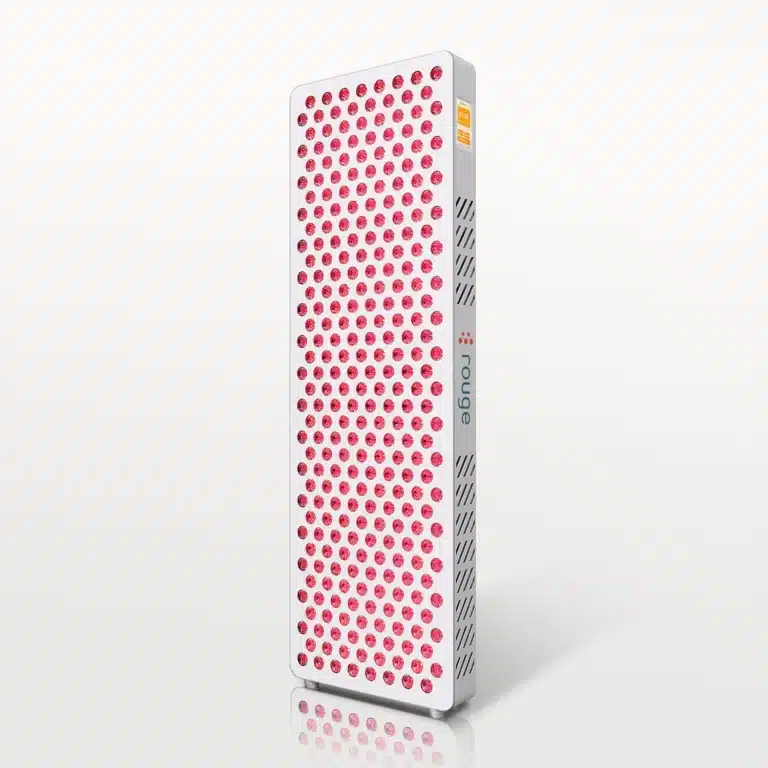
Rouge Ultimate G4: Full-body red light and infrared photobiomodulation panel
- Health Canada Class II medical device
- FDA Registered — cleared for muscle and joint support
- 8 Wavelengths: 630, 660, 810, 830, 850, 940, 1060nm
- 164 mW/cm² clinical-grade irradiance
- Full-body coverage — not a handheld or partial panel
How red light therapy works: the science of photobiomodulation
Red light therapy is the common name for photobiomodulation (PBM) — the application of specific wavelengths of red and near-infrared light to support cellular function. The mechanism is well-documented in peer-reviewed literature, with over 7,000 published studies on PubMed.
This is not infrared heat therapy, not UV light, and not a tanning bed. Clinical grade red light photobiomodulation operates through a specific biological pathway:
1. Light absorption
Red and near-infrared wavelengths (630–1060nm) penetrate skin and are absorbed by Cytochrome C Oxidase (CCO), a protein in the mitochondrial electron transport chain.
2. Cellular energy production
Light absorption releases nitric oxide from CCO, restoring normal electron flow. This increases ATP (adenosine triphosphate) production — the primary energy currency of cells.
3. Downstream effects
Increased ATP and nitric oxide release are associated with improved local circulation, modulation of inflammatory processes, and support for tissue repair pathways. These effects are dose-dependent and wavelength-specific.
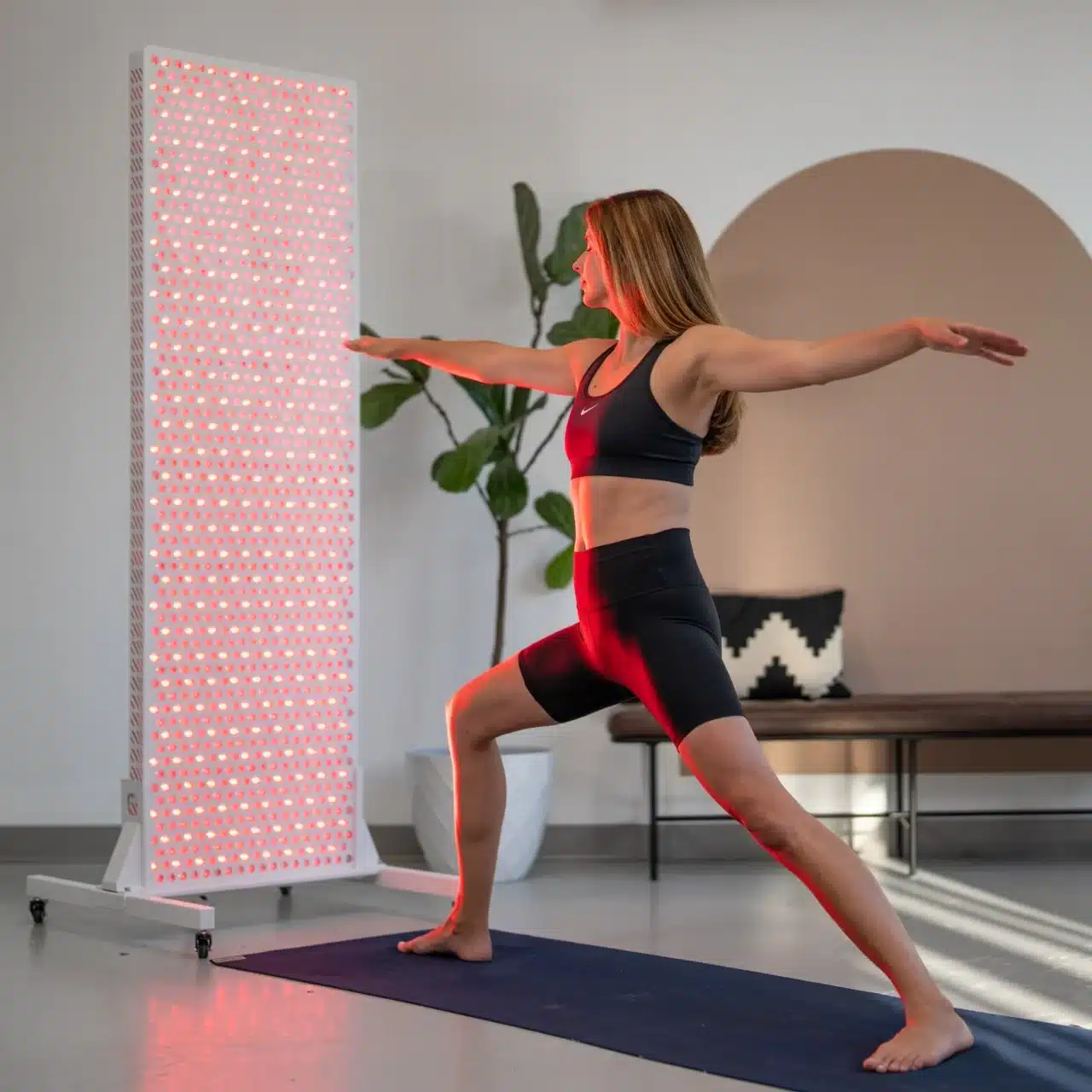
Different wavelengths penetrate to different depths and are studied for different applications. The Rouge G4 panel delivers 8 wavelengths simultaneously, covering the range most frequently studied in clinical research.
Red Light Therapy Wavelength ranges and their studied applications:
- 630–660nm (visible red): Studied for skin health, collagen support, and wound healing. Shallower tissue penetration.
- 810–850nm (near-infrared): Studied for pain, inflammation, muscle recovery, and joint support. Deeper tissue penetration. This range has the strongest clinical evidence base, including Lancet-level systematic reviews.
- 940nm (near-infrared): Studied for deeper tissue penetration and circulation support.
- 1060nm (near-infrared): Emerging research on adipose tissue metabolism.
Important context: Research quality varies by condition. Pain and inflammation evidence is strongest (systematic reviews, RCTs). Skin and collagen evidence is solid (controlled trials). Sleep, mood, and metabolic applications have plausible mechanisms but less robust clinical evidence. We present the research honestly — including where evidence is strong and where it is still emerging.
Why try red light therapy in a clinical setting
You can buy a home device. You can visit a wellness spa. Both are legitimate options. Here’s what a clinical session offers that those options don’t — and why it may make sense to start here.
Comparing your options
| Factor | Home device | Wellness spa | White Lotus Clinic |
|---|---|---|---|
| Wavelengths | Typically 2–4 | Varies (often 2–4) | 8 wavelengths (630–1060nm) |
| Body coverage | Partial (targeted panels) | Varies by equipment | Full-body panel |
| Irradiance | Often unverified | Varies | 164 mW/cm² (verified) |
| Regulatory status | Consumer electronics | Varies | Health Canada Class II |
| Clinical guidance | Self-directed | Basic staff guidance | Licensed practitioners available |
| Integration with care | Isolated | Isolated | Can integrate with existing naturopathic or acupuncture care |
| Upfront cost | $3,000–8,000+ | Per session | Per session |
Try clinical grade red light therapy before you invest
A quality home red light therapy device costs $3,000 to $8,000 or more. That’s a significant investment before you know whether your body responds to photobiomodulation, what protocols work for your situation, or whether you’ll maintain consistency over time. Face masks, caps and home panels just don’t compare to the power of a clinical device.
A clinical session lets you experience full-body, clinical-grade photobiomodulation first. If you respond well and want to invest in a home device later, you’ll make that decision with direct experience — not marketing claims.
We also offer medically supervised sessions including custom wavelengths and power settings to treat a variety of conditions including wound healing, surgical recovery, and more. These are book as a naturopathic visit and include red light therapy as part of the treatment. This may be covered by extended insurance plans.
Clinical-grade red light therapy
The Rouge Ultimate G4 is a Health Canada Class II medical device delivering 8 wavelengths at verified 164 mW/cm² irradiance — full-body coverage in a single session. Consumer devices rarely match this specification.
Integrated clinical context
White Lotus Clinic has offered naturopathic medicine and acupuncture since 2002. If you’re already a patient, your practitioner understands your health context. Red light therapy can be discussed as part of your existing care.
Honest evaluation
We’ll tell you what the evidence supports and where it’s still emerging. If red light therapy doesn’t seem appropriate for your situation, we’ll help you evaluate this according to current evidence and your health condition.
What to expect at a red light therapy session
Sessions are straightforward. No preparation required, no recovery time, no special clothing needed beyond what you’re comfortable with
1) Arrive and check in
No preparation needed. Arrive at your scheduled time. Wear or bring comfortable clothing that allows you to expose the skin areas you’d like to be treated.
First-time visitors receive a brief orientation about the equipment and session protocol. Consent forms can be filled in ahead of the appointment online.
2) Red Light Set up
You’ll be shown to the treatment room with the Rouge G4 panel. Undress to your comfort level.
More skin exposure generally means more light absorption, but there is no requirement.
Protective eyewear is provided and mandatory (200-2000nm OD5+ protection)
3) Session
15–20 minutes. Stand or sit at the recommended distance from the panel. Most people describe the experience as a gentle and pleasant warming sensation.
For medically supervised sessions or acupuncture treatment, the device is positioned over the treatment table. The wavelengths and distance will be customized by your practitioner to promote healing in your condition.
4) Done
Get dressed and go about your day. No recovery time is needed and the treatment generally causes no side effects for the majority of patients.
A mild warming sensation, a mood boost and increased energy is commonly reported after the treatment.
Session details for Red Light Therapy
- Duration: 15–20 minutes of light exposure
- Frequency studied in research: 2–5 sessions per week, depending on the condition and protocol
- What to wear: Undress to comfort level. Underwear or swimwear is fine.
- Eye protection: Provided and mandatory to wear for your session. 200-2000 nm protection, OD5+
- Contraindications: Red Light Therapy is generally considered safe for most adults and conditions.
Contraindications include: taking photosensitizing antibiotics/medications, active cancers, photosensitive epilepsy, recent eye surgeries, retinal detachment, Grave’s Disease, and in pregnancy. Please reach out to us for more information on whether red light therapy is safe for your condition.
Common Conditions Treated with Red Light
- Depression and Fatigue
- Wound healing
- Skin repair, post surgical healing
- Poor circulation
- Hypothyroidism
- Skin health and collagen support
- Hair loss (alopecia)
- Diabetic foot ulcers
- Musculoskeletal injuries or Chronic joint discomfort
- Endometriosis and Pelvic inflammation
- People curious about photobiomodulation who want clinical-grade access before investing in a home device
- Athletes and active individuals exploring recovery support
- Photobiomodulation used adjunct to naturopathic or acupuncture care
What the research on Red Light Therapy explores
Photobiomodulation has been studied across a range of conditions. Evidence quality varies — we present it honestly so you can make informed decisions. All citations are from peer-reviewed sources.
Evidence quality key:
- Strong evidence — Systematic reviews, meta-analyses, multiple RCTs
- Moderate evidence — Controlled trials, smaller RCTs
- Emerging evidence — Plausible mechanism, limited clinical data
Pain and inflammation — Strong evidence
The most extensively studied application of photobiomodulation. Research includes systematic reviews and meta-analyses for:
- Knee osteoarthritis: A 2019 study found PBM significantly reduced pain and disability.1 A 2005 Cochrane-affiliated review confirmed effectiveness for rheumatoid arthritis pain and morning stiffness.2
- Chronic low back pain: A 2015 meta-analysis found clinically important short-term benefit.3 A separate 2015 study documented significant improvement with effects lasting 5+ years.4
- Fibromyalgia: A 2019 meta-analysis found reduced pain severity, stiffness, fatigue, and anxiety in fibromyalgia patients.5
- Post-surgical pain: Studies in tonsillectomy, tibial fracture, and cesarean recovery documented greater pain reduction and lower medication consumption.6
FDA indication language for the Rouge G4: “Relief of muscle spasms, minor muscle and joint aches, pain and stiffness associated with arthritis.”
Skin health and collagen — Moderate evidence
A 2014 controlled trial (Wunsch & Mayr) found that 12 weeks of red and near-infrared light exposure resulted in reduced wrinkle depth, improved skin smoothness, and increased intradermal collagen density compared to controls.7
Research indicates that red light wavelengths (630–660nm) are absorbed by fibroblasts and may stimulate collagen and elastin production. This is the basis for photobiomodulation’s study in dermatological applications.
Note: White Lotus Clinic also offers cosmetic acupuncture with targeted LED light therapy for facial-specific concerns using a separate device.
Muscle recovery and athletic performance — Moderate evidence
Research explores photobiomodulation for post-exercise recovery, delayed onset muscle soreness (DOMS), and tissue repair. Proposed mechanisms include enhanced ATP production in muscle tissue and modulation of inflammatory markers post-exercise.
Studies suggest that pre-exercise and post-exercise PBM application may support recovery time and reduce exercise-induced muscle damage markers.
Sleep and mood — Emerging evidence
A study in female athletes found that 30 minutes of nightly red light exposure was associated with increased melatonin levels and improved sleep quality.8 Proposed mechanisms include influence on circadian signaling through non-visual photoreceptors.
Research on transcranial PBM (not the same as full-body) explores effects on mood and cognitive function through enhanced brain energy metabolism and cerebral blood flow. This is an active area of study with plausible mechanisms but limited clinical validation for full-body application.
Seasonal fatigue — Emerging evidence
Red and near-infrared light therapy is explored for seasonal energy changes, particularly in northern climates with reduced winter daylight. This is distinct from bright light therapy boxes used for Seasonal Affective Disorder (which use visible white/blue light).
Proposed mechanisms include enhanced mitochondrial function and improved circulation. Clinical evidence is early-stage, but the mechanism is biologically plausible given established PBM pathways.
Neuropathic support — Moderate evidence
A 2018 review found that photobiomodulation was associated with accelerated nerve regeneration, improved nerve function, and reduced neuropathic pain.9 A 2016 systematic review of 14 studies documented consistent findings across multiple neuropathic conditions.
Tendinopathy and plantar fasciitis have also been studied, with systematic reviews finding supportive evidence for PBM as an adjunctive intervention.
Research is presented for educational purposes. Individual responses to photobiomodulation vary. Photobiomodulation is explored as adjunctive support — not a substitute for medical evaluation or treatment. We do not claim that red light therapy treats, cures, or prevents any disease or condition.
Condition-specific pages (coming soon):
Common questions about red light therapy
Is red light therapy legitimate science or wellness hype?
Photobiomodulation has over 7,000 published studies on PubMed, including systematic reviews in The Lancet for pain applications. The mechanism — light absorption by Cytochrome C Oxidase leading to increased ATP production — is well-established in cell biology. The Rouge G4 is classified as a Health Canada Class II medical device and is FDA registered. That said, evidence quality varies by condition. Pain and inflammation research is strongest. Skin and collagen evidence is solid. Sleep, mood, and metabolic applications are still emerging. We present the evidence as it is, not as marketing.
Should I buy a home device instead of coming to the clinic?
It depends on your goals and where you are in the process. Home devices are a reasonable option for people who know they respond well to photobiomodulation and want daily access. However, quality home panels cost $3,000 to $8,000 or more, deliver fewer wavelengths, and irradiance specifications are often unverified. A clinical session lets you experience clinical-grade, full-body photobiomodulation first — so if you do invest in a home device, you’re making that decision with direct experience rather than marketing claims. We have no financial incentive to keep you coming back instead of buying your own device.
Is red light therapy safe?
Photobiomodulation is generally considered safe for most adults when used as directed. The light wavelengths used are non-ionizing (no UV), non-thermal at therapeutic distances, and have no established cumulative toxicity. Eye protection, is mandatory to wear during your session and is provided. Contraindications are discussed at intake and may include active cancer, photosensitizing medications, and pregnancy (due to limited research, not known harm). The Rouge G4 holds Health Canada Class II classification and FDA registration, indicating it meets safety standards for its intended use.
How many sessions do I need?
Research protocols vary by condition and study design, typically ranging from 2 to 5 sessions per week over 4 to 12 weeks. There is no universal protocol. We suggest starting with a single session to see how you respond, then discussing frequency based on your goals and what the research supports for your situation. We do not prescribe a fixed number of sessions — how you respond guides the decision.
What does a session feel like?
Most people describe a gentle warmth. The session is passive — you stand near the panel for 15 to 20 minutes (turning halfway through for full-body coverage). There is no pain, no vibration, and no sensation beyond mild warmth. Some people report feeling a subtle energy shift afterward. There is no recovery time.
I’m already a patient at White Lotus Clinic. Can I add this to my visits?
Yes. Red light therapy sessions can be booked as a standalone service or as an add-on to your existing registered acupuncture, reiki or somatic therapy (naturopathic) appointments. If your practitioner thinks photobiomodulation may complement your current care, they can discuss how it might fit. The advantage of adding it within your existing care is that your practitioner already understands your health context.
What conditions is red light therapy used for?
Photobiomodulation is studied across a range of applications. The strongest evidence exists for pain and inflammation (arthritis, low back pain, fibromyalgia, post-surgical recovery). Moderate evidence supports skin health and collagen production, muscle recovery, and neuropathic conditions. Emerging research explores sleep quality, seasonal energy patterns, and mood. We do not claim it treats or cures any condition. The research section on this page presents the evidence by condition with honest assessments of evidence quality.
Is this like a tanning bed?
No. Tanning beds use ultraviolet (UV) radiation, which causes DNA damage, skin aging, and increases skin cancer risk. Red light therapy uses non-UV wavelengths (630–1060nm) that do not tan skin, do not cause UV damage, and operate through an entirely different biological mechanism (mitochondrial absorption vs. melanin activation). There is no UV exposure in a red light therapy session.
Red Light Therapy Fees
Red light therapy session fees
| Session type | Duration | Fee |
|---|---|---|
| Package of 5 | 20 min | $300 |
| Single session | 20 min | $70 |
| Medical Red Light Therapy with licensed Naturopathic Doctor | Customized red light treatment for specific medical condition | 30 min treatment fee ($160 Dr. Fiona) |
| Add-on to acupuncture, reiki or somatic therapy | 20 min light exposure | Complimentary red light session with acupuncture for a limited time (regular $40) |
| Packages must be used within 1 year, single patient use only | ||
Insurance coverage
Standalone red light sessions are typically not covered by insurance. However, if red light therapy is incorporated as part of naturopathic treatment and requires practitioner support - it may quality for coverage by extended health insurance. Patients seeking red light therapy for wound healing, injuries, post-surgical healing and other conditions requiring specific red light therapy protocols may fall into this category.
Location & Community Access
Hours & Availability
| Monday | 9:00 AM – 5:00 PM |
|---|---|
| Tuesday | 9:00 AM – 5:00 PM |
| Wednesday | 9:00 AM – 5:00 PM |
| Thursday | 9:00 AM – 7:00 PM |
| Friday | 9:00 AM – 5:00 PM |
| Saturday | 9:30 AM – 4:30 PM |
| Sunday | Closed |
We're located in the Willowdale neighborhood, just east of Yonge Street.
Getting Here:
- By Transit: Short walk from Sheppard-Yonge Station (Yonge line)
- By Car: 3 minutes from the Highway 401 Bayview exit
- Parking: Available on-site and on surrounding streets
Serving Our Community:
We provide registered acupuncture care to patients across North York, including Willowdale, Lansing, Newtonbrook, Bayview Village, and the Greater Toronto Area.
About White Lotus Clinic
White Lotus Clinic has provided naturopathic medicine and acupuncture in North York since 2002. Red light therapy is offered as an adjunctive service within this clinical context — not as a standalone wellness trend.
Our practitioners are registered with the College of Naturopaths of Ontario (CONO) and licensed to practice in Ontario. The clinic’s Medical Director, Dr. Fiona McCulloch, ND, has over 25 years of clinical experience and is the published author of “8 Steps to Reverse Your PCOS” (50,000+ copies sold internationally).
Why this matters for red light therapy: Unlike standalone RLT studios or spas, sessions here occur within a clinical environment where licensed practitioners can discuss how photobiomodulation relates to your broader health context. If you’re already a patient, your practitioner knows your history.
Device credentials
Rouge Ultimate G4 — full-body photobiomodulation panel
- Device
- Rouge Ultimate G4 — full-body photobiomodulation panel
- Regulatory classification
- Health Canada Class II Medical Device • FDA Registered • CE, RoHS, FCC certified
- Wavelengths
- 630nm, 660nm, 810nm, 830nm, 850nm, 940nm, 1060nm (8 wavelengths covering the range most studied in clinical research)
- Irradiance
- 164 mW/cm² (clinical-grade, manufacturer-verified)
- FDA indication
- “Relief of muscle spasms, minor muscle and joint aches, pain and stiffness associated with arthritis”
Practice established in 2002. We do not publish patient testimonials in compliance with regulatory standards. The credentials above are independently verifiable through professional organizations, Health Canada, and the FDA.
Curious enough to try it?
If you’ve been thinking about red light therapy and want to experience clinical-grade photobiomodulation in a supervised setting — start with a single session. No commitment beyond the visit.
Not ready to book yet?
A single session is exploratory — not a commitment to ongoing treatment. Try it, see how you respond, and decide from there.
No pressure. No subscription. Just access to clinical-grade equipment and honest information.
Important: White Lotus Clinic does not provide emergency or urgent care services. If you experience symptoms requiring immediate attention, please go to urgent care or the hospital. Red light therapy is an adjunctive wellness service, not a medical treatment or substitute for medical evaluation.
Research References
- Wyszynska J, Bal-Bochenska M. (2018). Efficacy of high-intensity laser therapy in treating knee osteoarthritis: a first systematic review. Photomedicine and Laser Surgery. PubMed 29688827
- Ottawa Panel. (2005). Evidence-based clinical practice guidelines for electrotherapy and thermotherapy interventions in the management of rheumatoid arthritis in adults. Physical Therapy. PubMed 15921476
- Huang Z, et al. (2015). The effectiveness of low-level laser therapy for nonspecific chronic low back pain: a systematic review and meta-analysis. Arthritis Research & Therapy. PMC4704537
- Djavid GE, et al. (2007). In chronic low back pain, low level laser therapy combined with exercise is more beneficial than exercise alone in the long term: a randomised trial. Australian Journal of Physiotherapy. PubMed 17725472
- Yeh SW, et al. (2019). Low-level laser therapy for fibromyalgia: a systematic review and meta-analysis. Pain Physician. PubMed 31151332
- Langella LG, et al. (2018). Photobiomodulation therapy on pain management after total hip arthroplasty: a triple-blind RCT. Lasers in Medical Science. PubMed 29909435
- Wunsch A, Mayr K. (2014). A controlled trial to determine the efficacy of red and near-infrared light treatment in patient satisfaction, reduction of fine lines, wrinkles, skin roughness, and intradermal collagen density increase. Photomedicine and Laser Surgery. PubMed 24286286
- Zhao J, et al. (2012). Red light and the sleep quality and endurance performance of Chinese female basketball players. Journal of Athletic Training. PubMed 23182016
- Hashmi JT, et al. (2010). Role of low-level laser therapy in neurorehabilitation. PM&R. PubMed 21172691
White Lotus Clinic — Red light therapy and photobiomodulation in North York — providing naturopathic care since 2002.
Educational information only. This page is not medical advice and does not establish a provider-patient relationship. Red light therapy is offered as an adjunctive wellness service. We do not claim that photobiomodulation treats, cures, or prevents any disease or condition. Decisions about health services should be made with a regulated healthcare professional who reviews your personal history. Research citations are provided for educational purposes and do not constitute clinical recommendations.